Navaratna Gemstones: How to Identify Real Stones
By GJA Gem & Jewellery Academy · Published · 4 min read
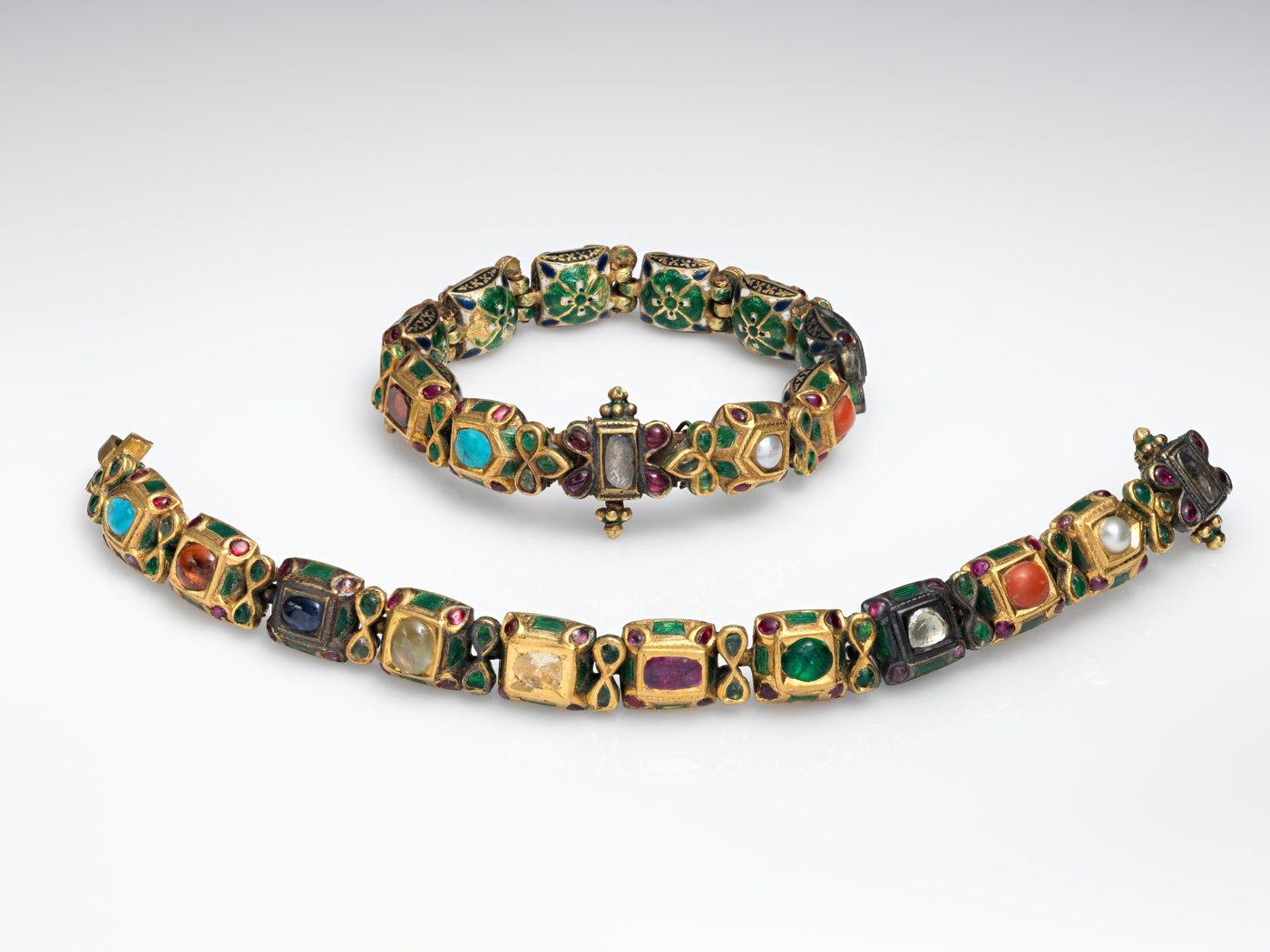
The only reliable way to know whether a Navaratna stone is real is to have it tested with gemmological instruments, or to buy it with a report from a gem laboratory. Each of the nine stones has common look-alikes, synthetics and treatments, and several of them fool the eye. Knowing what to watch for helps you ask the right questions before you pay.
This guide lists the nine Navaratna gemstones, the fakes and treatments most often sold in their place, and how a gemmologist tells them apart.
What are the nine Navaratna gemstones?
| Gemstone | Hindi name | Planet |
|---|---|---|
| Ruby | Manik | Sun |
| Pearl | Moti | Moon |
| Red coral | Moonga | Mars |
| Emerald | Panna | Mercury |
| Yellow sapphire | Pukhraj | Jupiter |
| Diamond | Heera | Venus |
| Blue sapphire | Neelam | Saturn |
| Hessonite garnet | Gomed | Rahu |
| Cat's eye chrysoberyl | Lehsunia | Ketu |
In a traditional Navaratna piece the ruby sits in the centre, with the other eight stones arranged around it.
What is sold in place of each stone?
- Ruby (Manik): synthetic ruby, red glass, red spinel and garnet, and rubies with fractures filled with lead glass. Glass-filled rubies are real ruby in name but far less durable and worth much less, and the filling is easy to miss without magnification.
- Pearl (Moti): cultured pearls sold as natural, and imitation pearls made of coated glass or plastic beads. Most pearls on the market today are cultured, which is fine as long as they are sold as cultured.
- Red coral (Moonga): dyed coral, reconstituted coral made from powder and resin, and plastic or glass imitations.
- Emerald (Panna): synthetic emerald, green glass, and natural emeralds whose fractures are filled with oil or resin. Filling is very common, so the question is how much and with what.
- Yellow sapphire (Pukhraj): synthetic yellow sapphire, heat-treated or beryllium-diffused sapphire, and cheaper yellow stones such as citrine and yellow topaz.
- Diamond (Heera): cubic zirconia, moissanite and lab-grown diamonds. Our guide on natural vs lab-grown diamonds explains why a handheld tester is not enough.
- Blue sapphire (Neelam): synthetic sapphire, blue glass, diffusion-treated sapphire, lead-glass-filled sapphire, and other blue stones such as iolite and kyanite.
- Hessonite (Gomed): orange-brown glass and other garnets or stones of a similar colour.
- Cat's eye (Lehsunia): quartz cat's eye and glass made with parallel fibres that copy the eye effect. True Lehsunia is chrysoberyl, which is much harder and heavier.
How does a gemmologist identify a Navaratna stone?
No single test settles it. A gemmologist combines several, and each one narrows the possibilities:
- Refractometer. Measures how much the stone bends light (its refractive index). Ruby and sapphire, emerald, chrysoberyl and garnet all fall in different ranges, and most glass reads differently again.
- Specific gravity. Weighing the stone in air and in water shows how dense it is. Chrysoberyl cat's eye is much heavier than quartz or glass of the same size.
- Microscope. Inclusions tell the story. Natural stones show crystals, needles and fingerprints of their own kind. Glass and many synthetics show round gas bubbles, swirls or curved growth lines, and fillings show flashes of colour or trapped bubbles in fractures.
- Polariscope and dichroscope. Separate single-refractive materials such as glass and garnet from double-refractive ones such as ruby, sapphire and emerald.
- Spectroscope and ultraviolet light. Show absorption patterns and glow that point to a particular stone, or to dye and treatment.
Some treatments, such as beryllium diffusion in sapphire and some fillings, need advanced laboratory instruments to confirm. That is why an independent lab report is worth having for any expensive stone.
Can you test a gemstone at home?
Not reliably. Scratch tests damage stones and prove little, since many fakes are hard too. Water, flame and "temperature" tests are not dependable. A 10x loupe can help you spot obvious bubbles in glass or a hollow, joined look in a doublet, but a clean-looking stone still needs proper testing. Rubbing pearls gently against your teeth can separate real pearls, which feel gritty, from smooth plastic or glass imitations, but it cannot tell you whether a pearl is natural or cultured.
How to buy a Navaratna stone with confidence
- Ask for a lab report from an independent laboratory, and check that it names the stone and any treatment.
- Ask directly about treatment. Heating, filling, oiling and dyeing are common. A treated stone is not a fake, but it should be described and priced as treated.
- Match the stone to the report. Compare the weight, shape and measurements.
- Be careful of prices that look too good. Fine untreated rubies, emeralds and sapphires are rare and expensive.
- Get older stones tested before you reset or sell them.
GJA Lab in Abids, Hyderabad, tests gemstones and issues reports for loose stones and set jewellery.
Learn to identify Navaratna stones yourself
GJA's Gem Basics – Navaratna Course is a 3 week course of 15 sessions on the nine stones. Students learn to identify natural, treated, synthetic and imitation Navaratnas on real instruments, and to understand their place in astrology. For a full grounding in coloured stones, the Basic Gem Identification course takes 2 months. You can read more about the subject in why learn gemology.
Frequently asked questions
Is a heated Pukhraj or Neelam fake?
No. Heat treatment is widespread in sapphire and the stone is still a natural sapphire. It should be disclosed, and untreated stones of the same quality cost more.
Is a cultured pearl a real pearl?
Yes. A cultured pearl grows in a real oyster after a nucleus is placed inside it. It is not an imitation, but it is not a natural pearl either, and the two are priced very differently.
Which Navaratna stone is most often faked?
Ruby, emerald and the sapphires are imitated and treated most often because they are the most valuable, but every one of the nine has common look-alikes.
Questions about a stone you own? Contact GJA or call +91 98480 17364.