Natural vs Lab-Grown Diamond: How to Tell the Difference
By GJA Gem & Jewellery Academy · Published · 8 min read
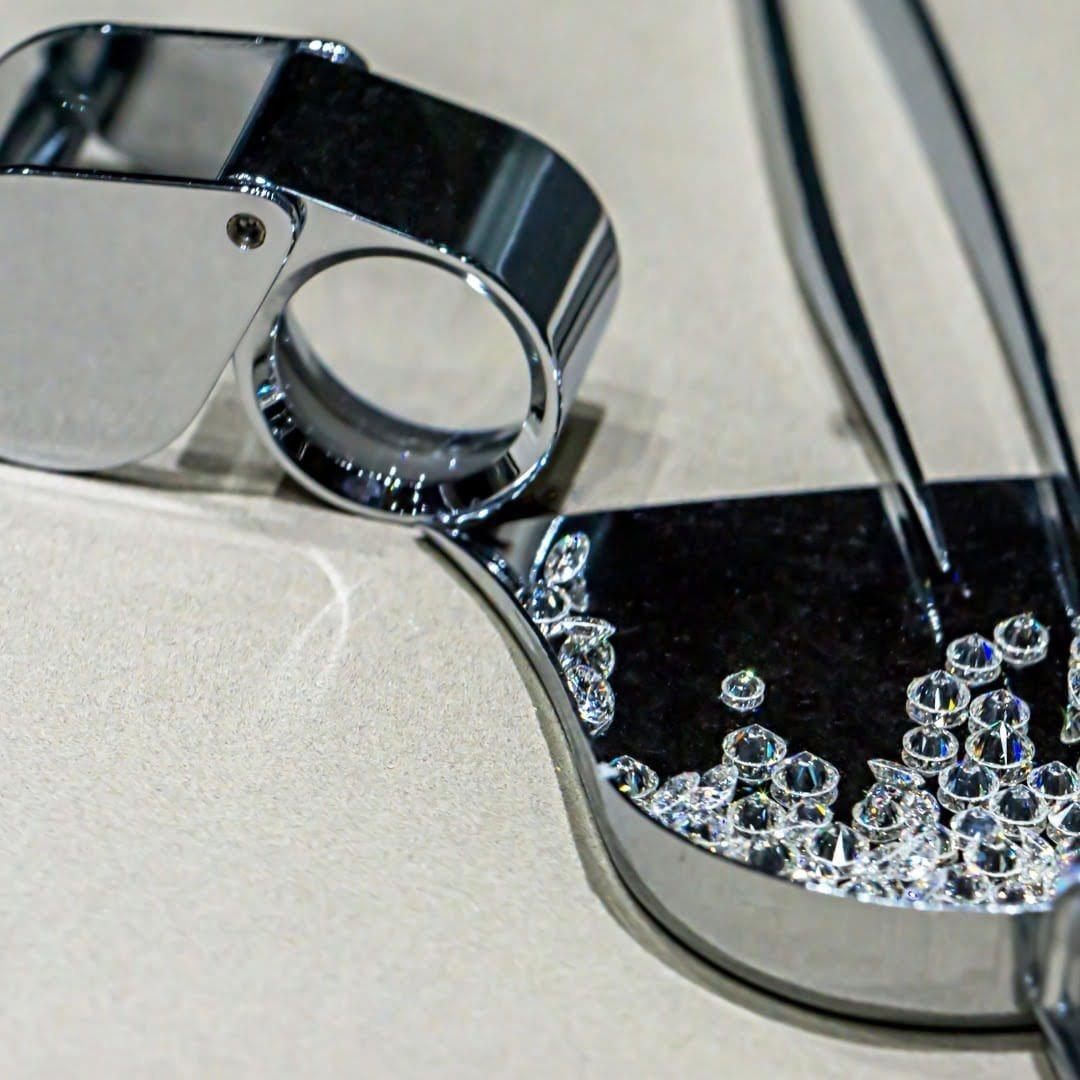
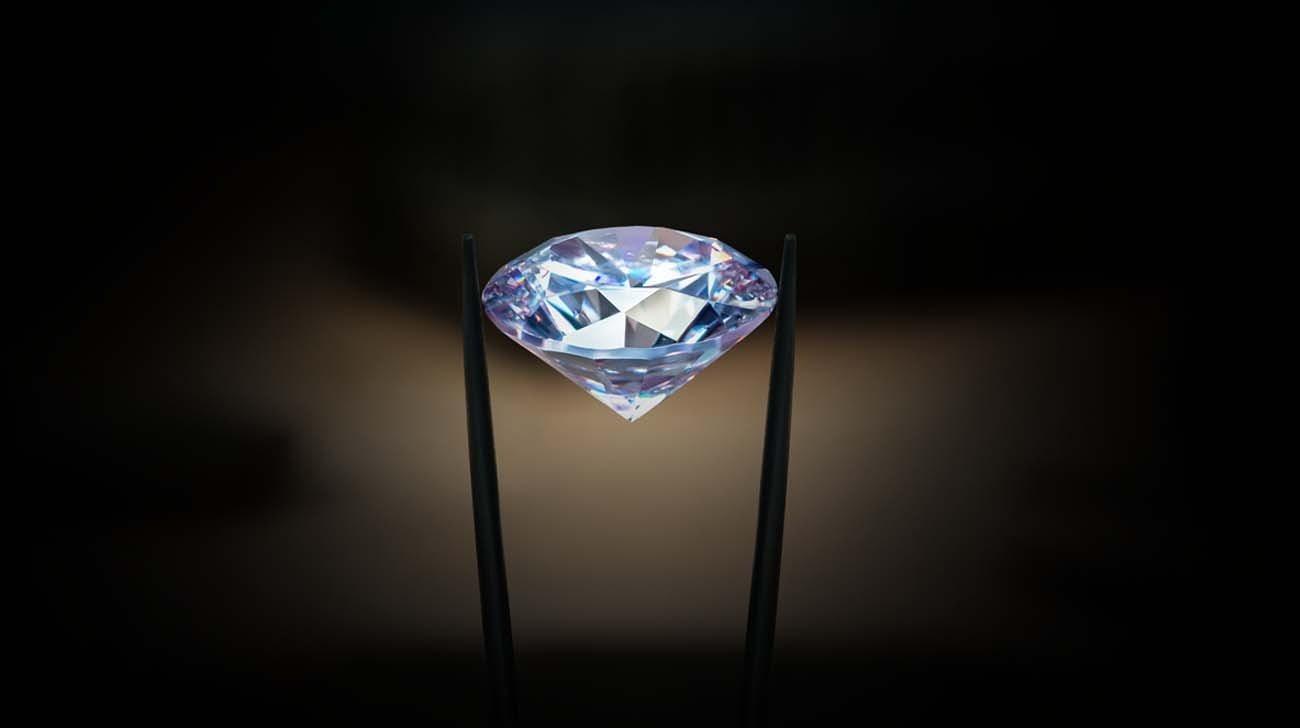
You cannot reliably tell a natural diamond from a lab-grown one by eye, with a 10x loupe or with an ordinary diamond tester. Both are real diamond: the same crystallised carbon, with the same hardness, sparkle and chemistry. The dependable way to know is a gem lab's detection equipment, which reads the growth features each type leaves inside the crystal, or a report from a lab that has already tested the stone.
This guide explains how lab-grown diamonds are made, why handheld testers get fooled, how a lab actually separates the two, and what to check before you buy or sell a diamond in India.
What is a lab-grown diamond?
A lab-grown diamond (also called a laboratory-grown, laboratory-created or synthetic diamond) is a diamond made in a factory instead of being mined. It is not a fake. It has the same chemical composition, crystal structure and hardness as a natural diamond. What differs is its origin, and with it the stone's rarity and price.
Lab-grown diamonds are made by one of two methods:
- HPHT (high pressure, high temperature): carbon is squeezed and heated in a press until it crystallises as diamond around a small seed crystal, roughly copying conditions deep inside the earth.
- CVD (chemical vapour deposition): a carbon-rich gas is broken down in a vacuum chamber, and carbon atoms settle layer by layer on a flat diamond seed plate.
India is now a major producer and exporter of lab-grown diamonds. In 2025-26 India exported US$1.13 billion of polished lab-grown diamonds, and exports of gold jewellery set with lab-grown diamonds rose 31.3% to US$1.43 billion, according to GJEPC figures. More lab-grown stones in the market means more chances for them to be mixed with natural ones, by mistake or on purpose.
Natural, lab-grown or simulant: what is the difference?
Three kinds of colourless stone are sold as, or alongside, diamonds. Only the first two are diamond.
| Stone | What it is | How it is identified |
|---|---|---|
| Natural diamond | Diamond formed deep in the earth and mined | Lab tests find the growth features of a natural crystal and none of a lab-grown one |
| Lab-grown diamond (CVD or HPHT) | Real diamond grown in a factory | Detection equipment: diamond-type screening, luminescence imaging and spectroscopy |
| Simulant (CZ, moissanite, zircon, glass) | A different material that only looks like diamond | Basic gem tests: thermal tester, magnification (moissanite shows doubled facet edges), refractive index, weight |
Simulants are the easy part. A trained eye with a loupe, plus a simple tester, catches most of them. Lab-grown diamonds are the hard part, because they are diamond.
Why can't a diamond tester tell them apart?
Most handheld "diamond testers" measure how quickly a stone conducts heat. Diamond conducts heat far better than glass or cubic zirconia, so the tester beeps for diamond. A lab-grown diamond is diamond, so it conducts heat the same way and passes the test just like a natural stone.
Moissanite causes a second problem. It also conducts heat very well, so it can pass a thermal-only tester. Multi-testers add an electrical conductivity check to catch moissanite, but this can misfire the other way: some HPHT lab-grown diamonds contain boron, which makes them conduct electricity, and a multi-tester may then call them moissanite.
So a handheld tester can tell you a stone is probably diamond rather than CZ or glass. It cannot tell you whether that diamond is natural or lab-grown. A 10x loupe usually cannot either. Lab-grown diamonds can be as clean as the finest natural stones, and their identifying features are mostly invisible without lab instruments.
How do gem labs tell natural and lab-grown diamonds apart?
Labs work in layers: fast screening first, then more detailed instruments for any stone that is flagged. Every test looks for evidence of how the crystal grew, which differs between the earth, an HPHT press and a CVD reactor.
1. Screening for diamond type
Diamonds are classified by the impurities in their crystal, mainly nitrogen. Most natural diamonds contain measurable nitrogen and are called type Ia. Most lab-grown diamonds contain very little nitrogen and are type II. Infrared (FTIR) spectroscopy and automated synthetic-diamond detectors read this quickly. A stone that is not type Ia is not automatically lab-grown, since some natural diamonds are type II, but it is referred for further testing.
2. Luminescence imaging
Under strong short-wave ultraviolet light, a diamond's growth history shows up as a fluorescence pattern. CVD diamonds show layered growth patterns from being built up in sheets. HPHT diamonds show geometric growth sectors, often in a cross-like arrangement. Natural diamonds show their own, different growth patterns. Instruments such as the DiamondView are built to capture these images, and GIA describes this imaging as a key step in identifying CVD and HPHT stones.
3. Phosphorescence, inclusions and strain
Many HPHT diamonds keep glowing after the UV light is switched off (phosphorescence) in a way that is unusual for colourless natural diamonds. HPHT stones can also contain metallic flux inclusions, which sometimes make them slightly magnetic. Between crossed polarising filters, natural diamonds usually show irregular strain patterns, while HPHT-grown diamonds usually show little strain.
4. Spectroscopy for confirmation
Photoluminescence and Raman spectroscopy pick up tiny defect signatures that confirm the result, such as silicon-related features often found in CVD diamonds. GJA Lab uses Raman and FTIR spectroscopy and synthetic diamond detectors for this work.
No single clue is proof on its own. A lab reaches its conclusion when several results agree, which is why a report from a properly equipped lab carries more weight than any one test.
Do small diamonds in jewellery need testing too?
Yes. Small diamonds, called melee, are where mixing is most likely. They are bought in parcels of hundreds or thousands and are too small to judge one by one by eye. GIA has reported finding HPHT-grown melee mixed into high-quality natural diamond jewellery. A lab can screen loose parcels stone by stone, and can examine diamonds that are already set.
GJA Lab issues mounted jewellery reports for natural diamond and gemstone jewellery, and Polki, uncut and lab-grown diamond jewellery reports, so set pieces can be documented without removing the stones.
What does Indian law say about selling lab-grown diamonds?
The Bureau of Indian Standards has notified IS 19469:2025, an Indian standard on diamond terminology adapted from the international standard ISO 18323. Under it, the word "diamond" on its own means a natural diamond. A lab-grown stone should be described as a "laboratory-grown diamond" or "laboratory-created diamond", and trade reports say vague terms such as "cultured" or "nature's" should not be used for lab-grown stones.
For a buyer the practical point is simple. Your invoice and any report should state plainly whether the stone is natural or laboratory-grown. If the bill only says "diamond" and the price looks like a lab-grown price, or the other way round, ask why.
How to buy a diamond and know what you are getting
- Ask for an independent lab report for any significant stone, and check whether it says natural or laboratory-grown.
- Verify the report online. Most labs let you check a report by its number or QR code. GJA Lab reports can be checked on GJA Lab's verification page.
- Match the stone to the report. Compare the weight, measurements and any laser inscription on the girdle (the thin outer edge) with the report.
- Check the invoice wording. It should describe the stone exactly as the report does.
- Be wary of a price that looks too good. Lab-grown diamonds sell for a small fraction of the price of comparable natural diamonds, so a "natural" stone priced well below the market deserves a test.
- Test before you sell or exchange. If you inherited a piece, or bought it years ago without a report, have it screened before you agree a price.
Getting a diamond tested in Hyderabad
GJA Lab is at No. 309, 3rd Floor, Oasis Plaza, Tilak Road, Abids, Hyderabad, and is open Monday to Saturday, 10 am to 6:30 pm. It offers:
- Diamond screening, which tells you whether a stone is natural, lab-grown (CVD or HPHT) or a simulant such as CZ or moissanite.
- A Natural Diamond Report, which confirms the stone is natural and records its weight, measurements, colour, clarity, cut grade, symmetry, polish and fluorescence.
- A Lab-Grown Diamond Report, clearly marked "LAB GROWN", with the same grading details.
Every GJA report carries a unique QR code for online verification. Call +91 91772 17364 or email lab.gjahyd@gmail.com before you visit.
Learn to tell them apart yourself
If you buy, sell or grade diamonds for a living, this is a skill worth having. GJA's Certificate in Basic Diamond Grading is a 2.5-month course in which each student works through at least 1,000 diamonds. One module covers telling natural diamonds from lab-grown (CVD and HPHT) diamonds, simulants and treated natural diamonds. The Professional Diamond Grading course then moves on to assorting parcels of small diamonds and grading mounted jewellery and Polki. If you are thinking about this as a career, read our guide on how to become a gemologist in India.
Frequently asked questions
Is a lab-grown diamond a real diamond?
Yes. A lab-grown diamond is real diamond, with the same chemical composition, hardness and optical properties as a natural one. It is not a simulant like cubic zirconia or moissanite. The difference is origin: it was made in a factory, so it is far less rare and much cheaper.
Will a lab-grown diamond pass a diamond tester?
Yes. A standard thermal diamond tester reads a lab-grown diamond as diamond, because it is one. Some boron-containing HPHT lab-grown diamonds can even read as moissanite on a multi-tester. Only lab equipment can confirm whether a diamond is natural or lab-grown.
Can a jeweller tell with a loupe?
Not reliably. A trained eye can sometimes spot clues, such as metallic inclusions in an HPHT stone, but many lab-grown diamonds show nothing distinctive at 10x magnification. Identification needs spectroscopy and luminescence imaging.
Is a CVD diamond better than an HPHT diamond?
Neither method is better in itself. Both can produce high-quality diamonds, and each stone should be judged on its own grading for colour, clarity and cut. The growth method mainly decides which features a lab uses to identify the stone.
Do lab-grown diamonds hold their value?
Far less than natural diamonds. Production has grown quickly and wholesale prices for lab-grown diamonds have fallen sharply over the past few years, so their resale value is low. Buy a lab-grown diamond because you like the stone and the price, not as an investment.
Sources
- GIA: Identifying lab-grown diamonds and HPHT and CVD diamond growth processes
- GIA, Gems & Gemology lab notes: HPHT synthetic diamond melee in high-quality jewelry (Spring 2015)
- DiamondWorld: India's gem and jewellery exports reach $27.72 billion in FY26 (GJEPC data)
- DiamondWorld: BIS adopts IS 19469:2025 to standardise diamond terminology