How to Become a Gemologist in India: Courses, Skills, Salary and Jobs
By GJA Gem & Jewellery Academy · Published · 6 min read
To become a gemologist in India, you train in gem identification and diamond grading at a gemological institute, practise on real stones with lab instruments, and then join a jeweller, diamond manufacturer, trader or testing lab. You do not need a science degree to start. A focused certificate course takes two to three months, and a full diploma covering diamonds and coloured gemstones takes about ten.
India is a natural place to build this career. It is the world's largest centre for cutting and polishing diamonds, and its gem and jewellery exports were worth US$27.72 billion in 2025-26. This guide covers what gemologists do, the training path, the jobs and the pay.
What does a gemologist do?
A gemologist is a specialist who identifies and evaluates gemstones. For any stone, a gemologist answers four questions:
- What is it? A ruby, or a red spinel or garnet? A diamond, or a moissanite?
- Is it natural? Or lab-grown (synthetic), or an imitation such as glass?
- Has it been treated? Heating, fracture filling, coating and diffusion all change a stone's value.
- How good is it? Colour, clarity, cut and carat weight together decide its price.
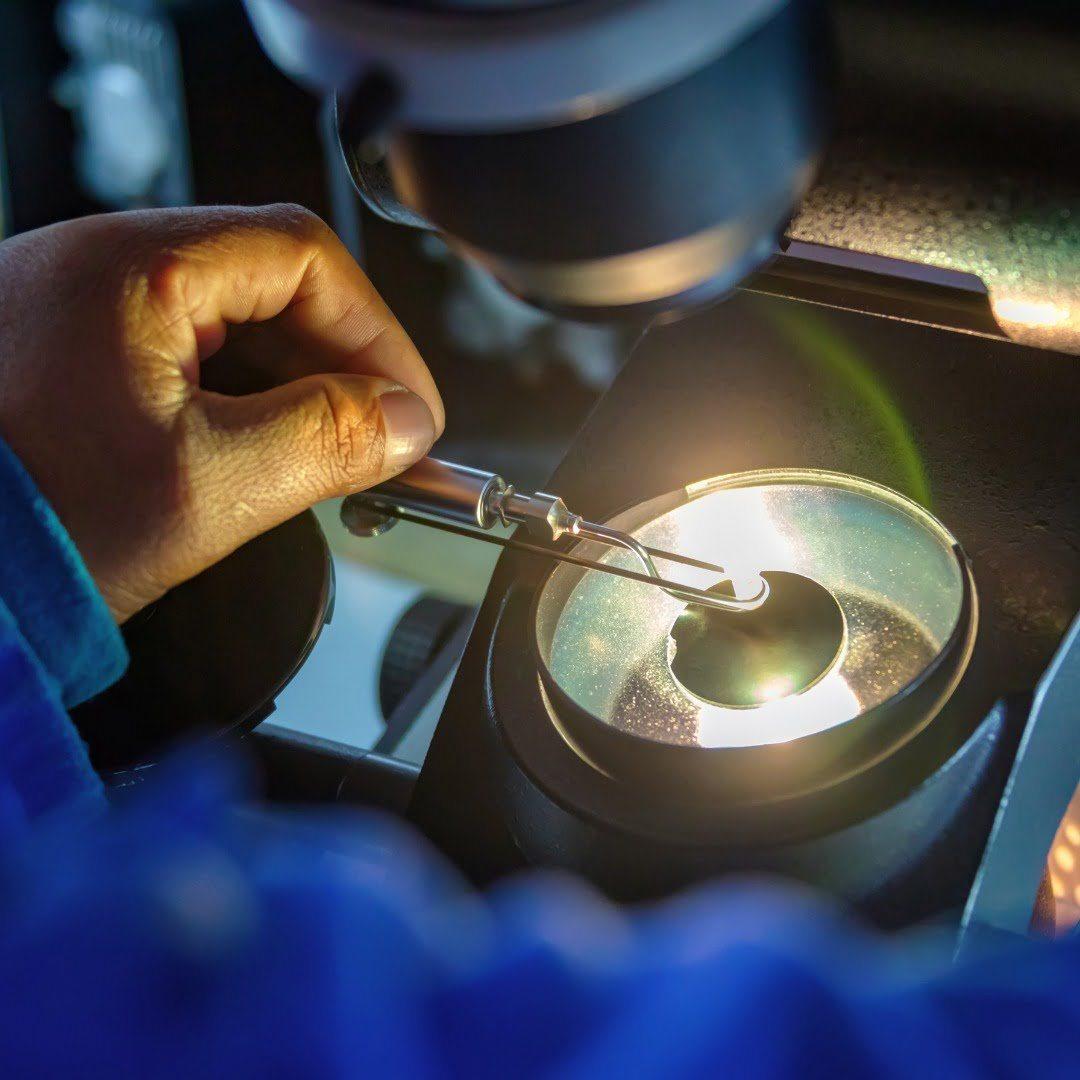
Most of the work happens at a bench, with a loupe, tweezers and instruments such as the microscope, refractometer, polariscope and spectroscope. Larger labs add spectrometers and synthetic-diamond detectors.
Gemologist, diamond grader or appraiser: what is the difference?
| Role | Focus | Typical employer |
|---|---|---|
| Gemologist | Identifies all gemstones: natural or synthetic, treated or untreated | Labs, jewellers, gem traders |
| Diamond grader | Grades diamonds on the 4Cs and sorts them into parcels | Diamond manufacturers, traders, labs |
| Gem or jewellery appraiser | Puts a value on stones and finished jewellery | Jewellers, auction houses, banks |
In practice the roles overlap, and many professionals train in both diamonds and coloured stones so they can handle anything that comes across the counter.
Why do Indian jewellers need gemologists?
- The size of the trade. Cut and polished diamonds were India's largest gem and jewellery export in 2025-26, worth US$12.16 billion, according to GJEPC data.
- Lab-grown diamonds. Exports of gold jewellery set with lab-grown diamonds grew 31.3% in 2025-26. With lab-grown and natural stones moving through the same supply chains, every part of the trade needs people who can tell them apart. Our guide on how to tell natural and lab-grown diamonds apart explains why this takes training and equipment.
- Disclosure rules. Under the Bureau of Indian Standards' IS 19469:2025 standard, "diamond" on its own means a natural diamond, and lab-grown stones must be described as laboratory-grown. Jewellers need staff who can check what they sell.
- Treated and imitation coloured stones. Navaratna and astrological gemstones sell in large numbers in India, and treated and imitation stones are common, so buyers want stones identified properly.
What qualifications do you need?
India has no single licence for gemologists. Employers look at your training and certificates and, above all, at whether you can actually identify and grade stones. Gemology courses take school leavers, graduates and people already working in the jewellery trade, and GJA's students include all three. Check each course's eligibility rules before you apply.
A typical path at GJA looks like this:
| Course | Length | What you learn |
|---|---|---|
| Basic Diamond Grading | 2.5 months | Diamond anatomy, the 4Cs, grading with loupe and microscope, natural vs lab-grown, pricing; practice on at least 1,000 diamonds |
| Professional Diamond Grading | 2 months | Assorting at least 2,000 small diamonds, grading mounted jewellery and Polki |
| Basic Gem Identification | 2 months | Natural, treated, synthetic and imitation gemstones with the microscope, refractometer, spectroscope and polariscope |
| Professional Gem Identification | 2 months | Rubies, emeralds, sapphires and pearls in depth, rough and phenomenal gems, Navaratnas, stones set in jewellery |
| Diploma in Gemology | 10 months | Complete training in diamonds and coloured gemstones |
GJA is affiliated to Medhavi Skills University, Skill India and the National Skill Development Corporation (NSDC), and students receive a Medhavi Skills University certificate along with the GJA certificate.
Which skills matter most?
- Observation under magnification. Reading inclusions, growth features and polish with a 10x loupe and microscope is the foundation of the job.
- Instrument handling. Knowing what each instrument can and cannot prove, and which test to run next.
- Colour judgement. Grading diamond colour consistently against references, and judging the colour of rubies, emeralds and sapphires.
- Speed with parcels. In the trade you may sort hundreds of small stones in a day, so selection and rejection must be quick and consistent.
- Market sense. Knowing how quality turns into price.
- Integrity. Clients rely on your word about stones worth lakhs of rupees.
Where do gemologists work?
- Gem testing and grading laboratories
- Diamond manufacturers and traders, buying, assorting and selling loose stones
- Jewellery retailers and wholesalers, as product specialists, buyers or quality-control staff
- Jewellery manufacturers, checking incoming stones
- Auction houses and consultancies
- Their own businesses, trading stones or offering identification services
About 130 firms have recruited GJA students or trained their own staff at GJA, most of them jewellers in Hyderabad and elsewhere in Telangana and Andhra Pradesh. The full list is on our opportunities page.
How much does a gemologist earn in India?
Pay depends heavily on the city, the employer and your experience, and published salary data is thin. Two salary sites give these broad figures:
- AmbitionBox reports gemologist salaries in India ranging from about ₹0.5 lakh to ₹9 lakh a year.
- ERI estimated an average of about ₹6.7 lakh a year in mid-2026, with a typical range of ₹4.8 lakh to ₹8 lakh.
Treat these as rough guides. Many people in the trade also earn through commission, their own trading or a business of their own, which salary surveys do not capture. In an interview, showing that you can grade and identify real stones does more for your starting pay than any certificate on its own.
How to choose a gemology course
- Hands-on hours with real stones. Ask how many stones you will handle yourself. At GJA, basic diamond grading students work through at least 1,000 diamonds, and professional students assort at least 2,000.
- Instruments for every student. You should use the microscope, refractometer, polariscope and spectroscope yourself, not just watch a demonstration.
- A working lab nearby. Seeing how a real lab tests diamonds, gemstones and gold shows you what the job looks like. GJA's academy and GJA Lab are in the same building in Abids, Hyderabad.
- Recognition. Check affiliations and quality certification. GJA is ISO 9001:2015 certified by TÜV NORD.
- Batch timings. GJA's diamond grading courses run Monday to Friday in morning and afternoon batches of 2.5-hour sessions, which suits many working students.
- Reviews and placements. Talk to past students and read reviews. GJA is rated 4.9 on Google from 722 reviews (November 2026).
Frequently asked questions
Can I become a gemologist after 12th?
Yes. Many students start straight after school with a certificate course in diamond grading or gem identification, then build up to a diploma. Check the eligibility rules of the course you choose.
How long does it take to become a gemologist?
You can make a focused start in two to three months with one certificate course. Covering both diamonds and coloured stones properly takes around ten months, the length of GJA's Diploma in Gemology, and real confidence comes from a year or two of handling stones at work.
Is gemology a good career in India?
It can be, if you enjoy detailed, hands-on work. India's diamond and jewellery trade is large, lab-grown diamonds have made identification skills more valuable, and trained people can work in labs, in the trade or for themselves. Pay starts modestly and grows with skill and reputation.
Do I need a science background?
No. Courses teach the science you need, such as refractive index, specific gravity and crystal systems, from the beginning. Patience and a good eye matter more than a science degree.
What is the difference between gemology and jewellery design?
Gemology is about identifying and grading stones. Jewellery design is about creating pieces, by hand or in CAD. If design interests you more, read our guide to a career as a jewellery designer in India.
Sources
- DiamondWorld: India's gem and jewellery exports reach $27.72 billion in FY26 (GJEPC data)
- DiamondWorld: BIS adopts IS 19469:2025 to standardise diamond terminology
- AmbitionBox: Gemologist salary in India
- ERI: Gemologist salary in India