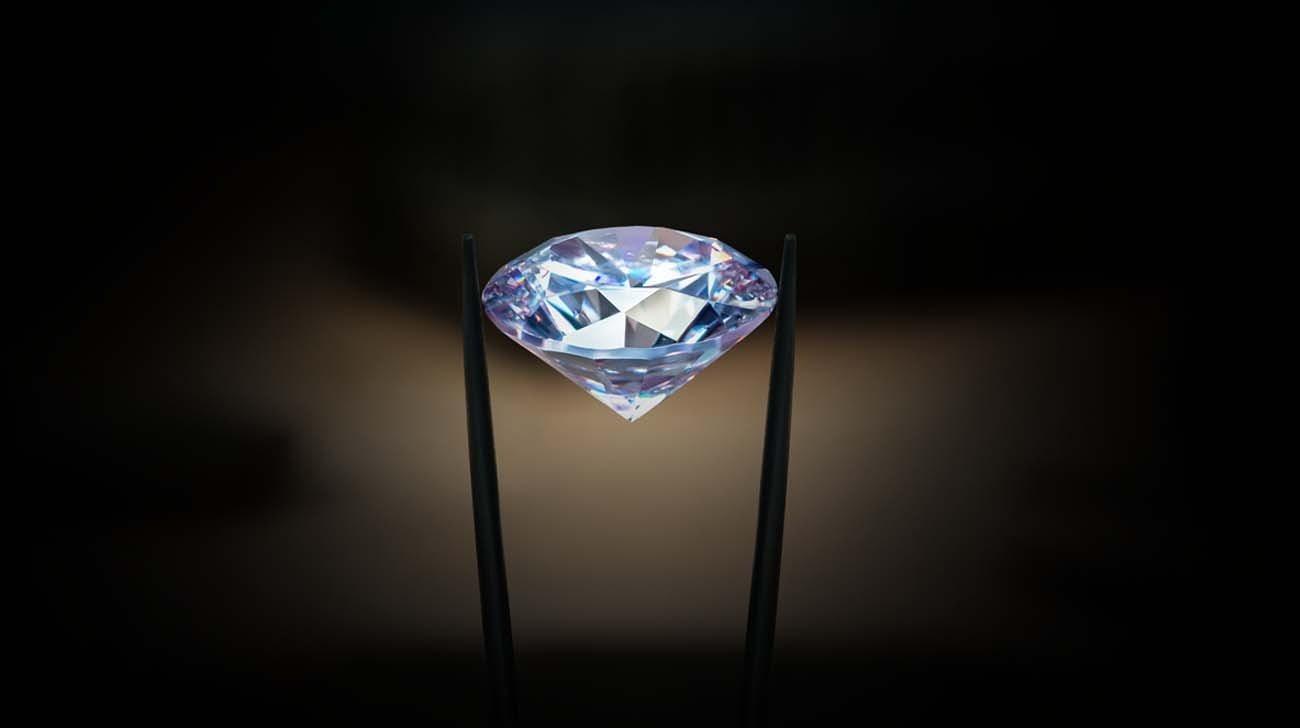
How to Check if a Diamond Is Real
By GJA Gem & Jewellery Academy · Published · 4 min read
You cannot be sure a diamond is real by looking at it, breathing on it or scratching glass with it. A trained eye with a 10x loupe and a good tester can catch most fakes, such as cubic zirconia and glass, but moissanite and lab-grown diamonds need proper instruments. For any stone worth real money, the dependable answer is an independent lab report that you can verify.
This guide explains what "real" means, which home tests to ignore, what a jeweller or gemmologist checks, and how to buy safely.
What does "real diamond" mean?
People usually mean two different questions:
- Is it diamond at all? Cubic zirconia (CZ), moissanite, white sapphire, zircon and glass all look like diamond but are different materials. These are called simulants.
- Is it a natural diamond? A lab-grown diamond is real diamond, made in a factory instead of mined. It is not a fake, but it is worth far less than a natural diamond of the same size and quality.
Most fakes fail the first question. The second needs a laboratory, as our guide on natural vs lab-grown diamonds explains.
Do home tests work?
Mostly not. Here is what the popular ones can and cannot tell you:
- The fog test (breathing on the stone): diamond clears quickly because it carries heat away. So does moissanite, and a dirty or oily diamond can fog like glass. Not reliable.
- The scratch test: diamond is very hard, but so is moissanite, and scratching can chip a diamond along its weak directions. Do not try it.
- The newspaper or dot test: a well-cut round diamond usually hides print seen through it, while some simulants do not. It only works on loose stones of certain cuts, and many good fakes pass.
- The water test: a loose diamond sinks, but so do CZ and most other simulants.
These tests can make you suspicious, which is useful. They cannot prove a stone is a diamond.
How does a jeweller or gemmologist check a diamond?
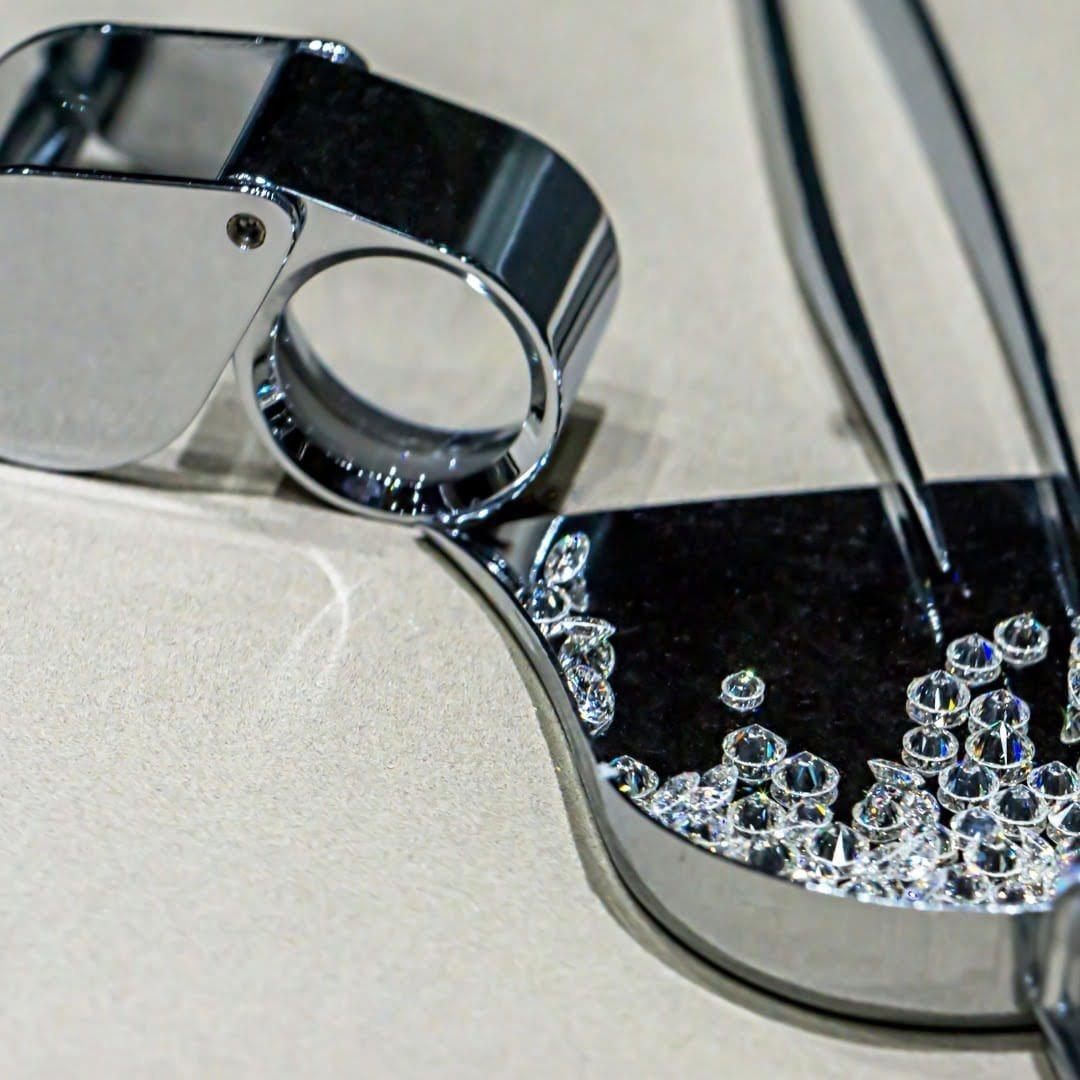
A 10x loupe. A gemmologist looks at the facet edges, which are sharp on diamond and often slightly rounded on softer simulants. Moissanite shows doubled facet edges when you look through the stone at an angle, because it splits light into two rays and diamond does not. Natural inclusions such as small crystals and feathers also give clues.
A thermal or multi-tester. Diamond conducts heat extremely well, so a thermal tester separates it from CZ and glass. Moissanite also conducts heat well, so multi-testers add an electrical check to catch it. Neither kind can separate a natural diamond from a lab-grown one, because both are diamond.
Weight and measurements. CZ is much heavier than diamond for the same size, so a stone that weighs too much for its measurements is a warning sign.
Laboratory instruments. To tell natural from lab-grown, labs use diamond-type screening, ultraviolet imaging of the growth pattern and spectroscopy. This is the only reliable way to answer the second question.
How to buy a diamond safely
- Ask for an independent lab report for any significant stone, stating whether it is natural or laboratory-grown.
- Verify the report online with its number or QR code, and check that the weight and measurements match the stone.
- Check the bill. It should describe the stone the same way the report does, including the words "natural" or "laboratory-grown".
- Be careful of prices that look too good for a natural diamond of that size.
- Get old or inherited jewellery tested before you sell, exchange or reset it.
GJA Lab in Abids, Hyderabad, offers diamond screening and natural and lab-grown diamond reports, each with a QR code for online verification.
Learn to check diamonds yourself
If you buy or sell diamonds for a living, learning to grade and test them pays for itself quickly. GJA's Basic Diamond Grading course (2.5 months) has students practise on at least 1,000 real diamonds, and covers telling natural diamonds from lab-grown diamonds and simulants. The Professional Diamond Grading course goes on to assorting small diamonds and grading mounted jewellery. Read why learn diamond grading for more.
Frequently asked questions
Does a real diamond sparkle in rainbow colours?
Diamond shows flashes of colour, but so do CZ and moissanite, and moissanite shows more. Sparkle alone tells you very little.
Can a jeweller's diamond tester be wrong?
Yes. Thermal testers pass moissanite, some multi-testers misread certain lab-grown diamonds, and none of them can separate lab-grown from natural. Treat a tester result as a first check, not proof.
Is a lab-grown diamond a fake diamond?
No. It is real diamond with the same hardness and sparkle. It should simply be sold and priced as lab-grown.
Have a stone you want checked? Contact GJA or call +91 98480 17364.