Jewellery Designing Course After 12th: Eligibility and Careers
By GJA Gem & Jewellery Academy · Published · 4 min read
Yes, you can start a jewellery designing course straight after Class 12, from any stream. Science, commerce and arts students all join, and you do not need to be good at drawing on day one. What matters is choosing a course that teaches both hand rendering and computer design, and that leaves you with a portfolio employers can look at.
This guide covers eligibility, the kinds of courses available, how long they take, what you learn and the work you can do afterwards.
Who can join a jewellery designing course after 12th?
Anyone who has passed Class 12 can join a certificate or diploma course in jewellery design. Your stream does not matter. Commerce students often bring a head for costing and the business side, science students tend to pick up CAD quickly, and arts students usually have an eye for form and colour. All three do well.
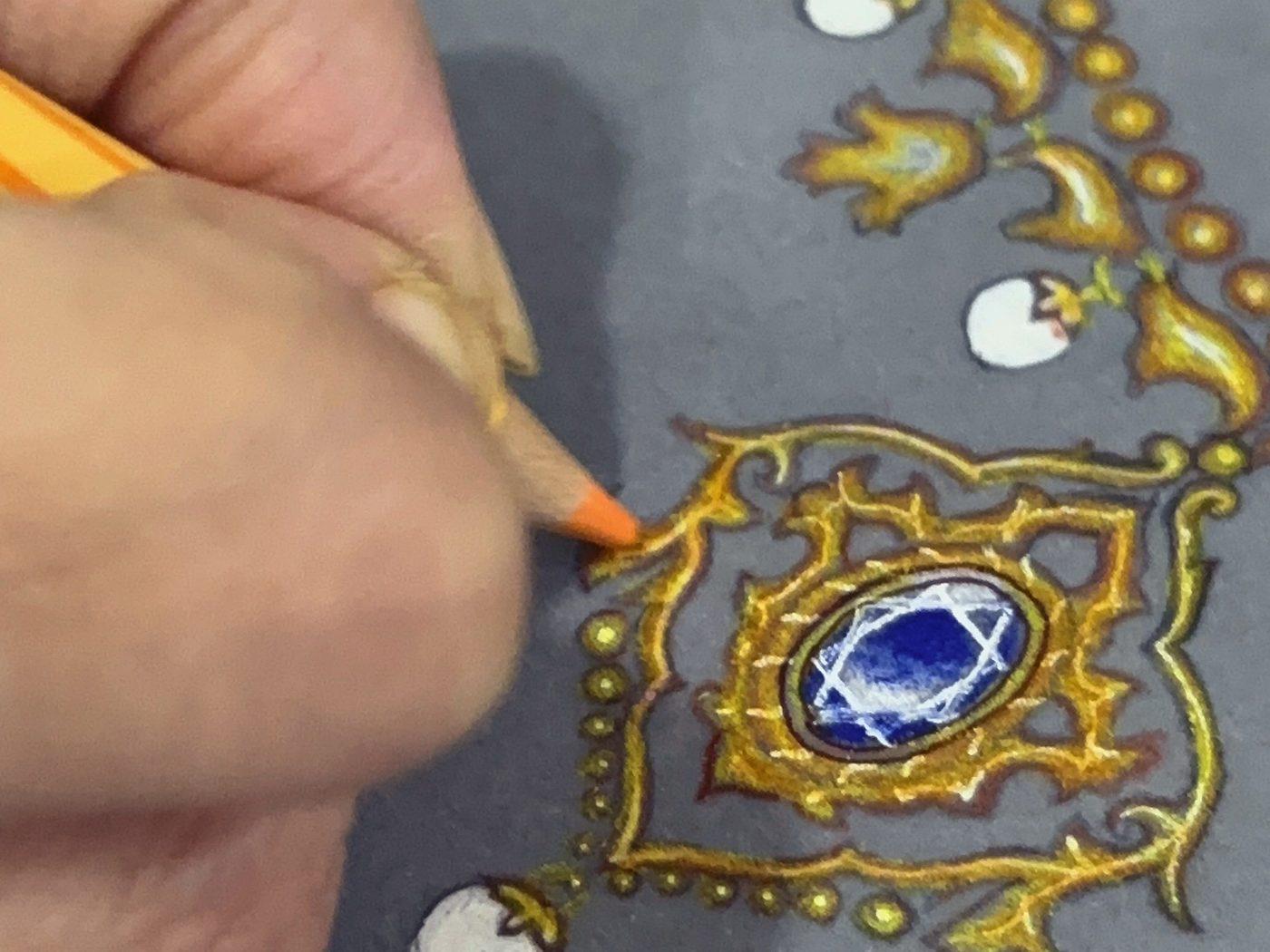
Many students worry about drawing. Hand rendering is a technique, not a talent you either have or lack. In a good basic course you start with simple shapes, learn how light falls on metal and stones, and build from there through steady practice in class.
What kinds of jewellery design courses are there?
There are three broad routes after Class 12:
- Short certificate courses of one to five months, each focused on one skill such as hand rendering, CorelDRAW or CAD. Good if you want to start working quickly or add a skill to the family business.
- Diploma courses of around a year that combine several certificates into complete training, from sketching to 3D models ready for production.
- Degree programmes in accessory or jewellery design at design colleges, which take three to four years and usually need an entrance exam.
If you are not sure yet whether design is for you, a basic certificate is a low-risk way to find out. Each certificate at GJA counts towards the diploma, so nothing is wasted if you decide to continue.
Which jewellery design courses does GJA offer?
GJA teaches jewellery design in person at its campus in Abids, Hyderabad. Students usually take the courses in this order:
- Basic Manual Jewellery Designing (3 months): drawing, rendering gold, silver and gemstones, settings, and designing rings, earrings, pendants and necklaces by hand.
- Professional Manual Jewellery Designing (3 months): technical drawings, bridal and men's jewellery, Indian traditions such as kundan, temple and polki work, and costing.
- Jewellery Design in CorelDRAW (1 month): clean 2D illustrations for catalogues and customer approvals.
- Jewellery Design in CAD (4.5 months): 3D models in Rhino and Matrix, stone settings, rendering, weight calculation and STL files for 3D printing.
Together these make up the 11 month Diploma in Jewellery Designing. Students receive a GJA certificate and a Medhavi Skills University certificate. GJA is affiliated to Medhavi Skills University, Skill India and NSDC.
Should you learn hand drawing or CAD first?
Start by hand. Hand rendering teaches proportion, perspective and how a piece is actually built, and it is still how designers show ideas to customers across the counter. CAD comes next. It turns a drawing into a precise 3D model that a factory can print and cast, and it assumes you already understand how jewellery is constructed. Students who skip straight to CAD often struggle with settings and proportions that a hand designer would get right without thinking.
What does a jewellery designer do?
Most of the work is designing to a brief: a collection for a brand, a bridal set for a family, a piece built around a customer's own stones, or a lighter version of an existing design that fits a budget. Designers work out how a piece will be made, how much metal it needs and roughly what it will cost, then present drawings or renders for approval.
Careers after a jewellery designing course
- Designer with a jewellery manufacturer or retail brand
- CAD designer preparing models for 3D printing and casting
- Freelance designer for private clients and family jewellers
- Designer in your own family business
- Your own label, selling online or through exhibitions
GJA students have gone on to internships and jobs with jewellers, and some have won at the National Jewellery Awards. You can read their stories in GJA student success stories, and see firms that have hired GJA students on the opportunities page. For more on the work itself, read career as a jewellery designer in India.
How to choose the right course
- Look at student work. Ask to see renders and CAD models made by recent students, not only the teachers' samples.
- Check the software. Rhino and Matrix are widely used in Indian jewellery manufacturing. Our guide on Rhino vs Matrix explains the difference.
- Ask about practice time. Design is learned by drawing every day in class, with a teacher correcting your work.
- Ask what you leave with. A portfolio of finished designs matters more to employers than the certificate alone.
Frequently asked questions
Can I join a jewellery designing course after 12th commerce?
Yes. Any stream is fine. Commerce students often find the costing and business parts of the course easier.
How long does it take to become a jewellery designer?
At GJA, the basic hand rendering course takes 3 months, and the full Diploma in Jewellery Designing, which covers hand rendering, CorelDRAW and CAD, takes 11 months.
Do I need my own laptop?
Not to start. Manual design needs drawing materials, and GJA's CorelDRAW and CAD classes are taught in its computer lab. A laptop helps if you want to practise CAD at home.
To find the right starting point, see all jewellery designing courses in Hyderabad or talk to us about the next batch.