How to Become a Gold Loan Appraiser in India: Skills, Training and Jobs
By GJA Gem & Jewellery Academy · Published · 6 min read
A gold loan appraiser checks the purity and weight of the gold a customer pledges for a loan, so the lender knows what the security is really worth. To become one in India, you learn gold testing (touchstone, acid and XRF), hallmark checks, weight deductions and valuation, usually through a short practical course, and then apply to banks, NBFCs, gold loan companies, co-operative banks or jewellers.
The job has grown in importance since the Reserve Bank of India's 2025 rules on gold loans, which set out how lenders must test and record the gold they accept. This guide explains the work, the rules, the skills and the career path.
What does a gold loan appraiser do?
When a customer brings jewellery in for a loan, the appraiser:
- Inspects each piece for the hallmark and HUID, and for its construction, joints, wear and any sign of plating, hollow sections or repairs.
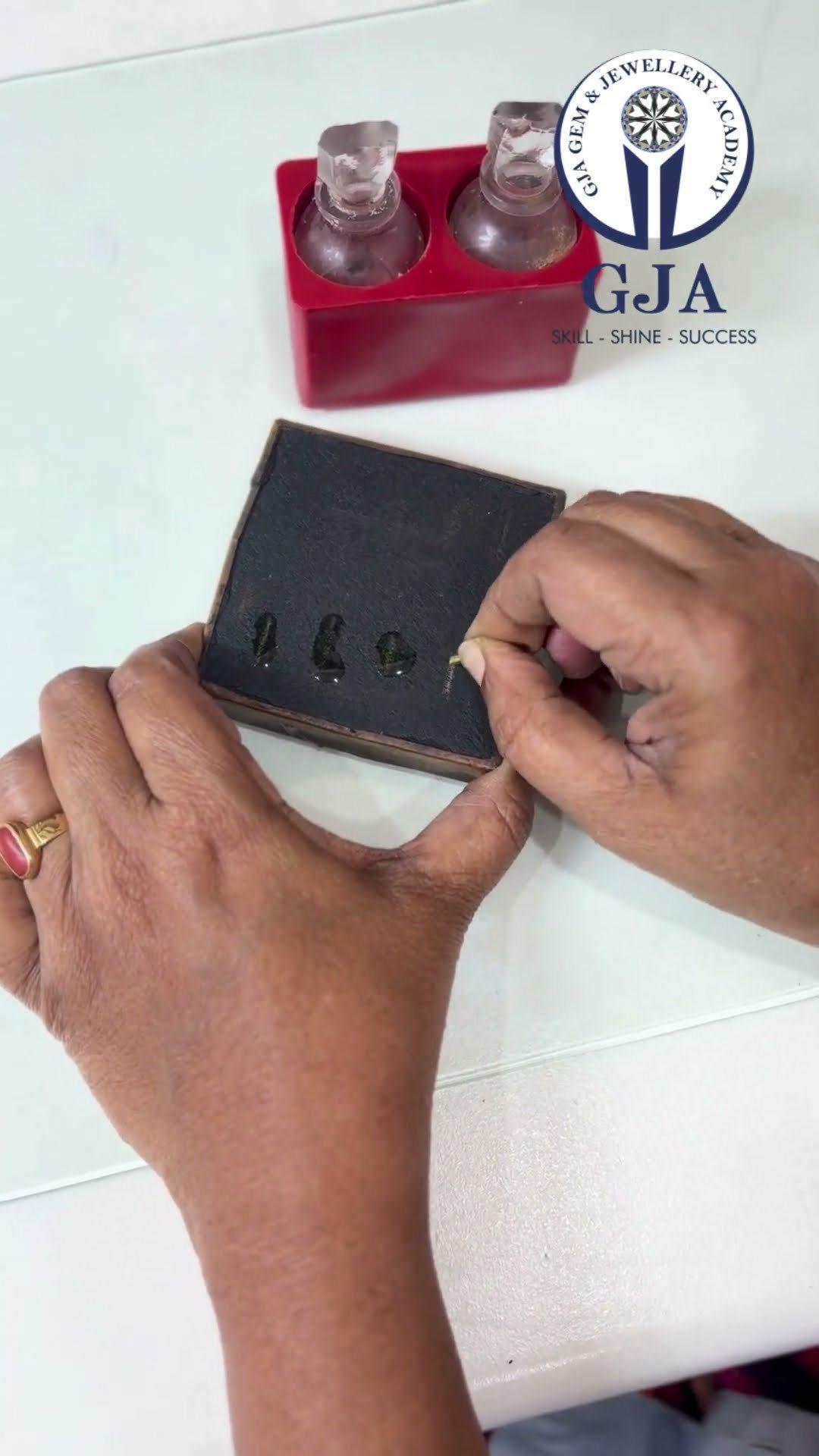
- Tests the purity, usually on a touchstone with testing needles and acid, and on an XRF machine where the branch has one.
- Weighs the jewellery on a calibrated scale to get its gross weight.
- Deducts what is not gold, such as stones, lac or wax filling and fittings, to arrive at the net weight of gold.
- Calculates the value from the net weight, the purity and the reference gold price the lender uses.
- Records the result and flags anything doubtful before the loan is sanctioned.
The most important part of the job is catching spurious gold: plated or part-gold items pledged as solid gold. One missed fake can cost the lender the whole loan amount, which is why lenders value appraisers with a trained eye and steady hands.
What did RBI's 2025 gold loan rules change for appraisers?
In June 2025 the RBI issued the Reserve Bank of India (Lending Against Gold and Silver Collateral) Directions, 2025, a single framework for banks, NBFCs and other regulated lenders, with compliance required before 1 April 2026. Several of its provisions shape an appraiser's daily work:
- Standard assaying. Lenders must follow standardised procedures to assess the purity and weight of the gold they accept.
- The borrower must be present while the gold is assayed at the time the loan is sanctioned, and deductions for stones, fastenings and similar items must be explained to them.
- A written certificate. The lender records the purity in carats, the gross weight, the net weight of gold, the deductions, any damage, an image of the collateral and its value. Both sides sign it, and the borrower keeps a copy.
- Valuation by actual purity. Collateral is valued at the reference price for its actual purity.
- Loan-to-value limits for consumption loans: up to 85% of the gold's value for loans up to ₹2.5 lakh, 80% for loans above ₹2.5 lakh and up to ₹5 lakh, and 75% above ₹5 lakh.
In short, every appraisal now has to be documented in detail and explained to the customer. That rewards appraisers who test accurately and can explain their deductions clearly.
What qualifications do you need?
Requirements vary by employer. Many bank branches empanel experienced appraisers, often from goldsmith families, and pay them a fee per loan appraised. NBFCs and gold loan companies more often hire appraisers as staff, and their job postings frequently combine appraisal with customer service and sales. Some ask for a year of banking or NBFC experience, while others accept freshers.
What every employer wants is proof that you can test gold reliably. A practical certificate course gives you that grounding, and the same skills apply whether you work for a bank, an NBFC or a jeweller.
Which skills does a gold appraiser need?
| Skill | Why it matters |
|---|---|
| Touchstone and acid testing | The standard quick test at a loan counter |
| Reading XRF results | Fast purity checks, and knowing when a surface reading may mislead |
| Hallmark and HUID checks | Verifying BIS marks and spotting fake or altered stamps |
| Weighing and deductions | Arriving at an accurate net weight of gold |
| Spotting spurious gold | Plated, hollow and mixed-metal pieces cause most losses |
| Valuation | Turning weight and purity into a value at the reference price |
| Clear records | The RBI rules require a detailed certificate for each loan |
| Explaining to customers | Borrowers must understand the deductions made on their gold |
For the basics of karat, fineness, hallmarks and testing methods, see our guide on how to check gold purity in India.
Where do gold appraisers work?
- Public sector, private and co-operative banks with gold loan counters
- NBFCs and specialist gold loan companies
- Pawn brokers
- Jewellers, especially for buying and exchanging old gold
- Gold buyers, refiners and testing centres
Firms that have recruited GJA students or trained their staff at GJA include Andhra Bank, Bank of Baroda, Bank of India, Muthoot Finance and Vardhaman (Mahila) Co-operative Urban Bank. The full list is on our opportunities page.
How much does a gold loan appraiser earn?
Published figures are modest and vary by employer and city. AmbitionBox, which collects self-reported salaries, shows gold appraisers in India earning from around ₹1 lakh a year at the start up to about ₹4.3 lakh, with NBFC roles at roughly ₹2 lakh to ₹4.1 lakh a year. Appraisers empanelled with banks are often paid a fee per loan, so their income depends on how much gold lending the branch does.
The skill also travels well. Experienced appraisers move into jewellery retail, old-gold buying, testing centres or businesses of their own.
Training as a gold appraiser at GJA
GJA's Certificate in Gold Valuation & Appraisal trains students to test, value and appraise gold jewellery. It covers:
- Gold purity testing
- Gold valuation
- Hallmarking
- Jewellery appraisal
Sessions are hands-on, and the course is taught at our Abids campus next to GJA Lab, which tests gold and silver jewellery on an XRF machine. Satya M, a recent student, wrote in a Google review that the course is "very useful for anyone looking to build a career in banking, NBFCs, or the jewellery industry."
For batch dates and fees, call GJA Education on +91 98480 17364 or contact us.
Frequently asked questions
Can a fresher become a gold appraiser?
Yes. Some NBFCs hire freshers for gold loan roles and train them on the job, and a practical course before you apply makes you a much stronger candidate.
Is touchstone testing still used now that XRF machines exist?
Yes. The touchstone is quick, cheap and works at any branch, so it remains the everyday test at many loan counters. XRF adds a fast, non-destructive reading where a machine is available. A good appraiser knows both methods and the limits of each.
If jewellery is hallmarked, does it still need testing?
Yes. A verified HUID is strong evidence of purity, but lenders still assess purity and weight themselves, and the RBI rules require standardised assaying. Hallmarks can also be forged, so testing is still needed.
How long does gold appraiser training take at GJA?
Contact GJA Education for the current duration and batch dates of the Gold Valuation & Appraisal course.
Sources
- Reserve Bank of India: Lending Against Gold and Silver Collateral Directions, 2025
- Cyril Amarchand Mangaldas: RBI Directions on lending against gold and silver collateral: a harmonised regulatory framework
- IIFL Finance: RBI gold and silver lending directions 2025: LTV caps and valuation rules
- AmbitionBox: Gold appraiser salary in India and in NBFCs